Research-based writing
My deep research-based writing usually starts in a place most people would rather avoid: too many sources, too much data, and just enough contradiction to make everything feel a little unstable. That’s where I thrive. I dig in—primary and secondary research, interviews, data analysis, whatever I can get my hands on—and start pulling threads until something coherent emerges.
But my goal with research-based writing isn’t just to get it right (though that matters); it’s also to make it readable. The best (slightly underhanded) compliment I’ve ever received came from a reviewer for a peer-reviewed academic journal I was working with to publish The Literary Refugees of Timbuktu, who told me my writing was “too accessible” and “not academic enough.” I took that as a win. If an average reader can engage with a complex topic, enjoy it, and actually learn something from it, that’s about as good as it gets.
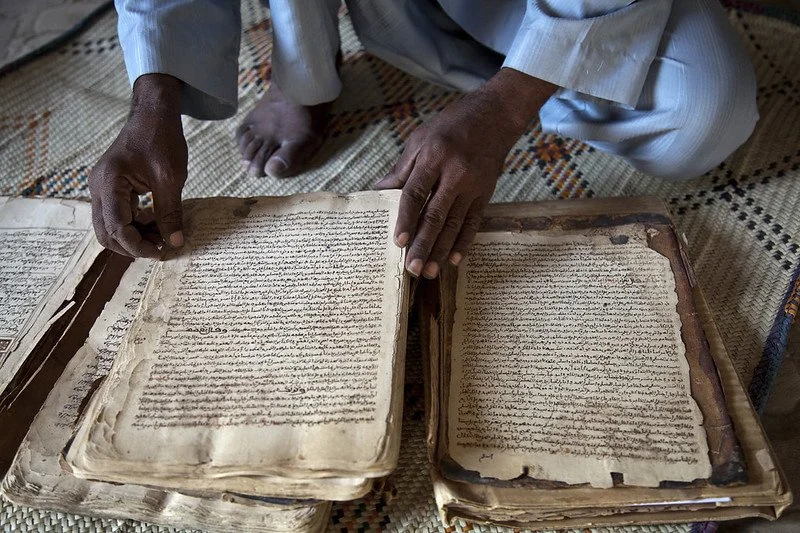
The Literary Refugees of Timbuktu: How a Group of Unlikely Allies Thwarted Al Qaeda and Organized One of the Most Brazen Cultural Heritage Evacuations Ever Attempted
As published in Preservation, Digital Technology, & Culture
For centuries, Timbuktu, Mali, has quietly housed some of the greatest treasures of the ancient world: hundreds of thousands of scientific, literary, and religious manuscripts. But when Al Qaeda jihadists seized control of the city in the wake of a coup in 2012, the manuscripts found themselves in dire threat of destruction. To save them, a group of unlikely allies worked together to organize one of the most brazen evacuations of cultural heritage ever attempted . . . and succeeded in rescuing 95% of Timbuktu’s ancient written heritage. In examining the story of the manuscripts, this article considers three areas—preparation, evacuation, and continued preservation—in which cultural heritage institutions can gain insight into the preservation of historical treasures in the midst of conflict.
Bonus reading: Book Review—The Bad Ass Librarians of Timbuktu
The Post-Truth Archive: Considerations for Archiving Context in Fake News Repositories
As published in Preservation, Digital Technology, & Culture
Our current media environment is in a state of post-truth disruption: fake news is rampant, trusted media sources are viewed as partisan and suspect, and emotional appeal and personal belief hold more influence than objective facts. While many information professions are focused on combatting fake news through media literacy education, policy development, and advancements in search and social media technology, the archival profession has a slightly different task: evaluating how fake news can be preserved. The proliferation of fake news marks a significant cultural shift in information, politics, and identity, and is a valuable retrospective on how we consume and share media and assess its collective impact on society. But archiving fake news is a complex endeavor, particularly when it comes to ensuring that the archive includes enough context to help future researchers interpret the information. This article briefly explores some of the ways archivists may need to rethink traditional archival practices when developing repositories for fake news in their archives.